
Overview
Led a full website redesign and migration impacting 2,000+ pages, aligning the site with WebNY branding standards while improving accessibility, usability, and visual consistency across a large-scale government platform.
The project involved redesigning the site in a parallel environment, maintaining ongoing updates across multiple servers, and executing a coordinated production migration with post-launch validation.


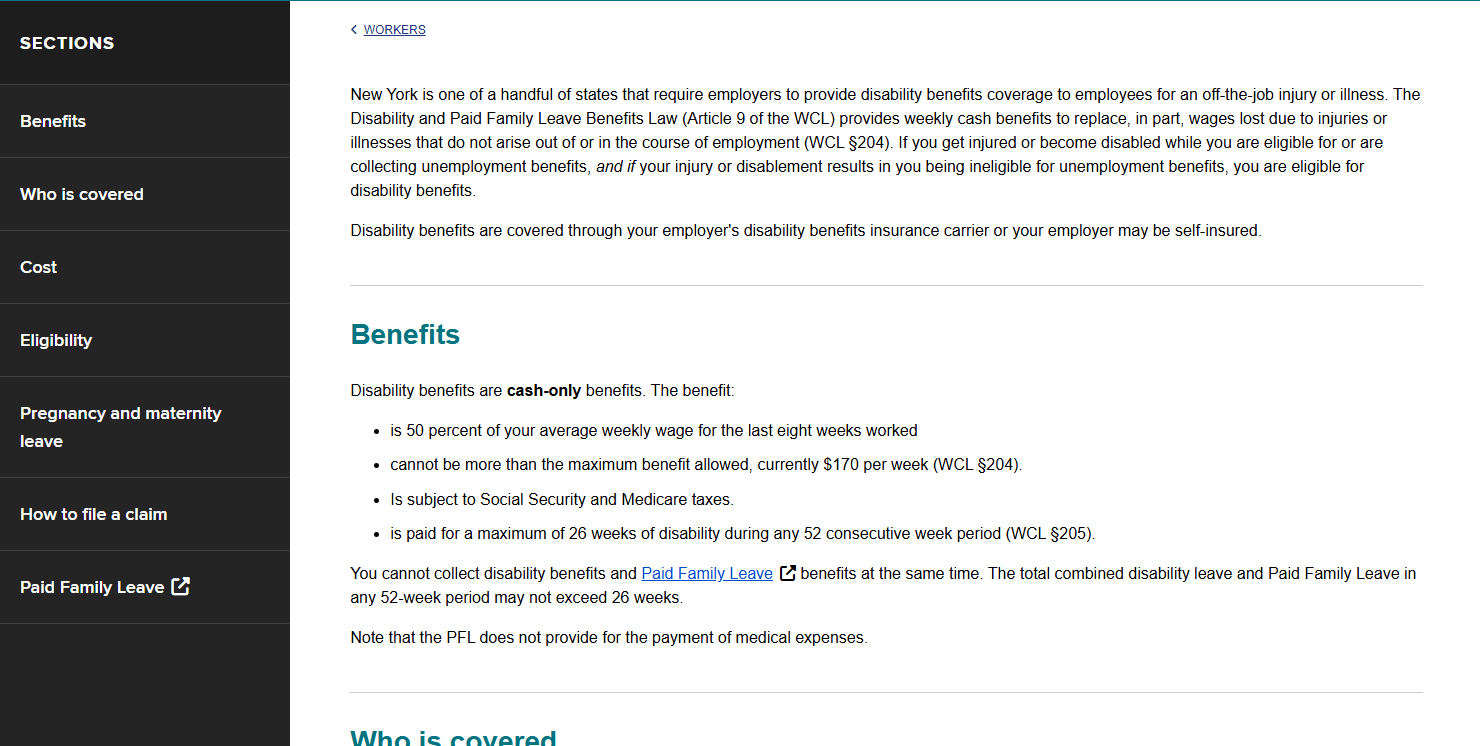

The project involved redesigning the site in a parallel environment, maintaining ongoing updates across multiple servers, and executing a coordinated production migration with post-launch validation.
Challenge
The website required a comprehensive redesign across 2,000+ pages and shared components, while continuing to support active production updates.
Key challenges included:
- Maintaining consistency across a large-scale site with shared templates
- Managing parallel environments (legacy and redesigned versions) without content drift
- Coordinating updates across four servers
- Ensuring accessibility compliance during visual and structural changes
- Executing a high-risk production migration with minimal disruption
Approach
1. Design & Branding Alignment
Partnered with graphic design to obtain updated icons and imagery.
Implemented WebNY-aligned interface and branding updates across shared templates and components, including:
- Updated color palette
- Rounded UI components
- Accessible focus indicators
Collaborated closely with teammate on implementation, including peer review of design and code to ensure consistency and quality.


2. Development & Implementation
Implemented front-end updates and responsive interface enhancements using HTML, CSS, and JavaScript to align the site with WebNY branding and accessibility standards.
My Contributions
Implemented:
- Back-to-top functionality
- Smooth scrolling behavior
- Social media icon updates
- Hero updates (select pages)
- Updated the Popular Services component to function correctly across all viewports
- Ensured responsive behavior across mobile, tablet, and desktop
- Updated links following large-scale page consolidation
- Aria-labels for icons and interactive elements
- Notranslate tags for structured content such as addresses, names, and email addresses
Accessibility & Standards
- Coordinated with WebNY to confirm best practices for:
- External link indicators
- PDF icon accessibility labeling
- Ensured implementation aligned with WCAG accessibility standards
Original left navigation styling prior to redesign implementation.
Updated left navigation styling aligned with WebNY branding standards.
3. Quality Assurance & Governance
Performed:
- Broken link validation across updated pages
- Cross-browser and multi-device testing
- Implemented and reviewed CSS and interface updates to ensure consistency across templates and page types
- Ensured visual and functional parity across templates and shared components
4. Content & Environment Management
Maintained both the live production site and a redesigned version hosted on a separate server, while continuing routine updates across four environments.
Due to the scale of the site (2,000+ pages) and ongoing updates, there was a high risk of inconsistencies between environments.
Developed a Google Sheets tracking system to:
- Ensure all updates were replicated across both versions of the site
- Prevent missed or inconsistent changes
- Provide visibility and accountability across the team
5. Migration & Launch Execution
Supported migration preparation and launch coordination for a large-scale production website redesign impacting 2,000+ pages.
Collaborated with ITS and internal stakeholders to support migration readiness and minimize disruption to users.
Prepared and validated key site components prior to launch, including:
- Verifying responsive behavior across templates and shared components
- Conducting broken link and navigation validation
- Reviewing layout consistency across updated page types
- Supporting QA review using predefined priority page checklists
Participated in post-launch support and validation activities following production migration, including:
- Identifying and helping resolve layout and functionality issues
- Verifying links routed correctly
- Confirming branding and accessibility updates carried through successfully into production
- Ensuring navigation and shared components behaved consistently across page types and devices
Results
Successfully supported the redesign and launch of a 2,000+ page government website modernization initiative.
Improved:
- Visual consistency
- Accessibility compliance
- Responsive usability
- Shared component standardization
Reduced risk of inconsistencies through structured tracking, QA workflows, and coordinated validation processes.
Helped support a stable production launch through extensive preparation, testing, and post-launch validation.
My Role
Lead contributor for redesign coordination, implementation, accessibility support, QA validation, and launch support.
Key responsibilities included:
- Coordinating branding alignment and shared UI implementation
- Implementing responsive enhancements and interface updates
- Leading accessibility implementation and standards coordination with WebNY
- Maintaining consistency across multiple environments and shared templates
- Supporting migration preparation, post-launch validation, and issue resolution
- Reviewing and validating implementation work for consistency and compliance
Tools & Technologies
- HTML, CSS, JavaScript
- Responsive design techniques
- Accessibility (WCAG, ARIA)
- Excel (tracking and QA validation)
- Cross-browser testing tools
Key Takeaways
- Large-scale redesigns require structured processes to manage parallel environments effectively
- Accessibility should be integrated during implementation, not retrofitted after launch
- Coordinated QA and real-time validation are critical to successful high-risk migrations

